 With fellow fellows Ruth Paul, SJD, Emily Hartley-Skudder and Daisy Sanders My op ed about creativity and AI appeared in the Otago Daily Times today. An earlier version of this piece was delivered as part of the University of Otago 2023 welcome for the Arts Fellows at the Hocken Collections research library.
I arrived at the University of Otago at the same time as artificial intelligence chatbot GPT-4. As the 2023 Robert Burns Fellow, I’m drawing on my capabilities and experience to write stories and essays. So is the chatbot. It’s a strange time to be a creative person. Throughout history artists and writers have often occupied outsider roles, and been subject to censorship, competition for resources, evolving technologies, changing social attitudes and their own internal struggles. I was working in the music industry when CDs and DVDs died, and people began getting their content online often for free. You wouldn’t steal a handbag, but you’ve probably watched a pirated movie. Now artificial intelligence poses new opportunities and threats for artists. You might have read An Angel at My Table by Janet Frame, or Aue by Becky Manawatu, both books that excavate childhood trauma, and both written by Robert Burns Fellows. Does it matter to us that these books were written by real people, and informed by their own thoughts and experiences? Or are we comfortable with AI crowdsourcing stories of pain and joy, and weaving its own tales from the echoes of our humanity? Earlier this year I went to a concert where Sean James Donnelly (SJD), the university’s Mozart Fellow, performed a set of his nostalgic pop anthems. His song Waterhole has been stuck in my head ever since. It recalls long summers spent swimming, going to the shopping mall and eating gas station pies. Remember those days? Actually, you might not remember - and neither do I. I’ve never had a summer like that, but Sean’s song tells me what they feel like. In listening to Waterhole, some part of Sean’s humanity has connected with mine. To me, Waterhole is an ode to the best summer ever. To someone else, it might be a troubling tale about unsupervised children. Drawing an even longer bow, it might advocate unhealthy eating or the support of capitalist structures. Different people interpret the same material differently, and art edges human culture forward in ways that can sometimes be challenging. In America, attempts to ban books doubled last year, with most of the books targeted being those that seek to advance human rights. What are the consequences of letting computers compose our music and tell our tales at a time when real, human stories are being removed from bookshelves? If you sing Waterhole several times in a row, like I have, it will come to feel not only like an ode to summer, but also like a lament. A waiata tangi for innocence. We are on the cusp of a new age, and holding on to our humanity is increasingly important. Rather than being in a digital universe reading automatically generated books, I want to stretch out under the sun and connect with human stories written by people like past Burns Fellows Hone Tuwhare, Renee, and Emma Neale. Will the ability to connect with human stories continue to be one of life’s simple comforts and pleasures, or will it become a luxury? Like organic food, will organic art - once abundant and accessible - become a premium product? If I told you GPT-4 wrote this for me, you might feel impressed. You might feel cheated. Perhaps you’d think this piece had more value if I told you it took hours to complete as I formed and reshaped my thoughts, talked with other writers, read relevant literature, and wrote and rewrote sentences. But the real value of this piece is in your own engagement with it, my words sparking ideas in your mind the way SJD’s music sparks emotions in mine. This wasn’t written by GPT-4, it was written by me, a real human who is grateful to the people who had the foresight to establish the trusts that make the University of Otago’s arts fellowships possible. Because in changing times like these, art provides solace, inspiration, and human connection.
 My short story Honey Babe is now available to read on the Overland website.
You can read Honey Babe here. If you enjoy it, you might also like my story The Hedgehog, which is available on the Turbine Kapohau website. You can read The Hedgehog here.  I'm working on a couple of longer projects at the moment, so it's been great to have the opportunity to get some short stories out into the world recently. My story Honey Babe is in Overland (it should be available to read online soon), and my story No Happy Ending is in the latest edition of takahē. I subscribe to both of these fantastic journals, so seeing my stories in their pages has been a real thrill! It was also a boost to be longlisted for the Commonwealth Short Story Prize. Huge congratulations to kiwi writer Shelley Burne-Field who made the shortlist this year. I love Shelley's short story Pinching out Dahlias and I'm looking forward to reading her shortlisted story, Speaking in Tongues.
 I was lucky to be selected as a writer for the 2021 Dunedin Writers & Readers Festival, and have spent a magical few days immersed in reading and writing. Thank you so much to the Dunedin Writers and Readers Festival organisers, supporters and volunteers for such a fabulous event.
It's fair to say that New Zealand bringing in bereavement leave for pregnancy loss has made waves around the world. I found myself converting my office into a studio last night for an interview with Australia's ABC News (above), and the story has also been shared in outlets including:
What's even more exciting is that our news seems to have sparked calls for other countries to update their employment legislation:
I'd love to know if anyone else has seen calls for change from other parts of the world. I packed my bag and drove towards the airport, not knowing if I was going to get on the plane.
It was Members’ Day in parliament’s House, and the Holidays (Bereavement Leave for Miscarriage) Amendment Bill was due to be read for the third and final time – if the affordable housing discussions, which were being conducted under urgency, wrapped up in time. I was stopped at the lights when MP Ginny Andersen’s EA rang. The reading was going ahead! One plane ride, one taxi drive and several coffees later, I found myself going through Parliament security. I went into The Beehive and temporarily exchanged my bags for a sticker and a lanyard before racing up two flights of stairs and being ushered into the House – a space that’s even more impressive in real life than it is on TV. Ginny gave an impassioned speech about the Bill, which was sparked when I sent a letter to Clare Curran about the lack of clarity in the Holidays Act for people grieving pregnancy loss. Clare took up the cause and later Ginny drafted the Bill and submitted it to the infamous biscuit tin (the vessel that Members' Bills are drawn from). The Bill could have languished inside the biscuit tin indefinitely, but it was drawn and in the years since Ginny and others have worked hard on the Bill to ensure that people impacted by pregnancy loss can access bereavement leave. During yesterday's final reading the Bill received cross-party support. Labour, National, Green and Act MPs stood to share their personal experiences and explain what the Bill would mean for them and their constituents. Thanks to Parliament TV On Demand, you can watch the speeches online:
It was heartening to hear so many people in support of the Bill, and I think it’s amazing that politicians are speaking about such private issues on such a public stage. Their actions will help break down some of the taboos around miscarriage and baby loss. Several politicians from across the House mentioned Ginny’s great work in shepherding the Bill through the House and gaining cross-party support. All speakers said the fateful words, “I commend this Bill to the House.” This means that there is just one more step – a formality – needed before the change to The Holidays Act becomes law: Royal assent. Ginny’s EA whisked me away to the Labour Caucus room where, beneath portraits of past Labour PMs, I chatted with some of Ginny’s team. (The fast-paced banter and the beautiful surroundings made it all feel very ‘In The Thick Of It’.) Ginny and her colleagues arrived and we enjoyed macaroons and sandwiches as we toasted making history! The celebration was short-lived as Ginny had to return to work (MPs work until 10pm on Tuesdays and Wednesdays). Ginny gave me a brief tour on the way out. I was introduced to the infamous biscuit tin that the Bill was drawn from, and I saw the billiards room and the glamorous Legislative Council Chamber. Then all of a sudden – it was over. I booked myself into a hotel, head buzzing. I’d like to say a huge congratulations to Ginny for her success with this Bill, and a huge thank you to Clare Curran who got the process started. Thank you also the Select Committee and everyone who made submissions on the Bill or helped in other ways. Together, we’ve made a little bit of history! More about the Bill More about miscarriage
I'm coming to the end of my writing retreat in beautiful Moeraki.
I spent the first day revising a long short story, the next couple of days writing a humorous short story, and over the past few days I've worked up ideas for something that might become a bit longer. A writer friend of mine stayed with me for the last two nights and we had loads of fun sharing story ideas and going on missions to the Katiki Point lighthouse (didn't see any penguins but saw loads of seals) and small settlement the Kaika ... and out for dinner at Fleur's Place seafood restaurant (luckily for us, they also have an excellent vegetarian menu). It will be great to go home but I'll really miss the sound of the sea, the incredible, ever-changing views, and the abundance of creatures - from the baby silvereye that flew inside my crib, to the goose I spotted wandering down to the sea and going for a dip, to the absurd numbers of rabbits (you might round a corner and see ten of them sitting completely still in a clearing, as though they're holding some kind of bunny freemason convention), to the spotted shags and oyster catchers and pied stilts ... and of course the kekeno (fur seals). In the meantime, I have a challenge set by the owners of the place I'm staying in - to eat as many of the courgettes from the garden as I can before leaving. Challenge accepted! |
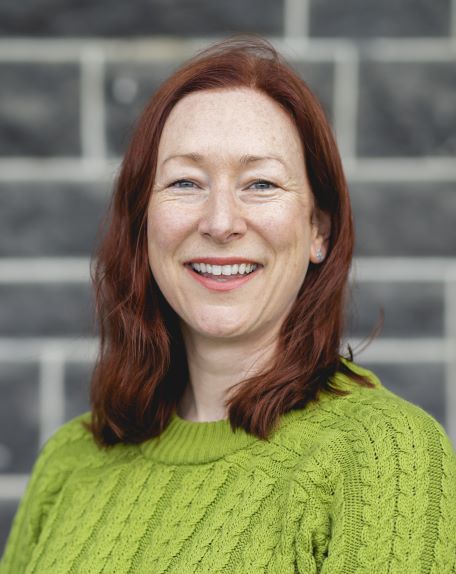
AuthorKathryn van Beek (she/her) is a Pākehā New Zealander of Dutch and English descent. A Robert Burns Fellow and a Winston Churchill McNeish Writers’ Fellow, Kathryn has a doctorate on the topic of using writing as a tool for positive change. Archives
February 2025
Categories
All
|


 RSS Feed